


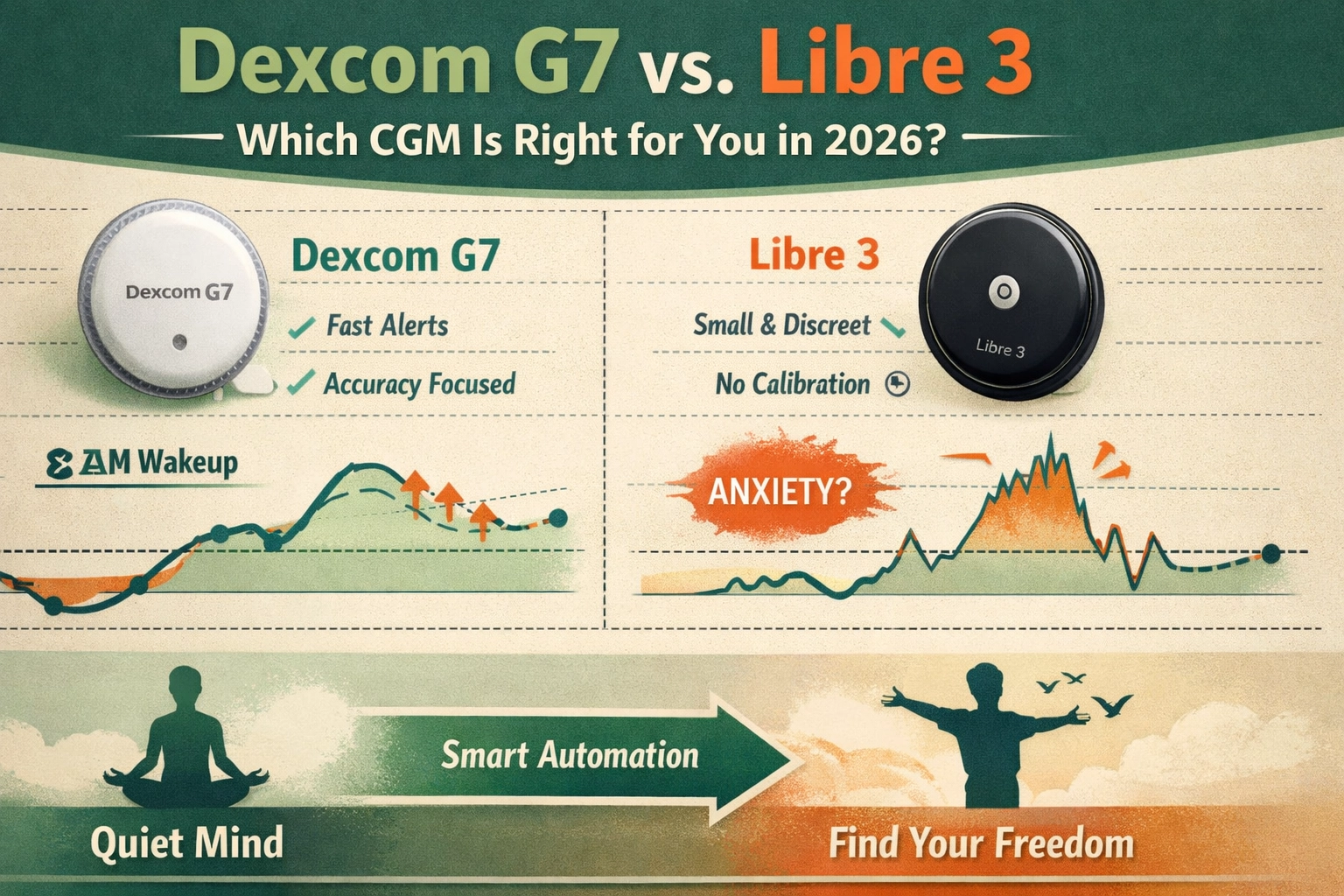
Choosing between the Dexcom G7 and the FreeStyle Libre 3 isn't just a clinical decision. It’s a lifestyle one.
For a Type 1 Diabetic, your CGM is more than a piece of tech; it’s an external organ. It’s the thing that wakes you up at 3:00 AM, the thing that dictates whether you can eat that bagel, and the thing that: hopefully: gives you enough peace of mind to actually focus on your job or your kids instead of your blood sugar.
In 2026, the gap between these two giants has narrowed. Both are incredibly accurate. Both are tiny. Both have eliminated the need for finger pricks for most people. But they are built with different philosophies. One is a high-performance, highly-customizable data hub. The other is a discreet, set-it-and-forget-it "invisible" sensor.
If you’re standing at the crossroads, let’s look at the math and the lived reality of both.
As an engineer, I look at the MARD (Mean Absolute Relative Difference). It’s the standard for CGM accuracy. The lower the percentage, the closer the sensor is to a lab-grade blood test.
In plain English: they are essentially tied. In 2026, you aren't choosing based on which one is "more right" about your glucose. You’re choosing based on how they deliver that information.
The first major difference is the warmup period.
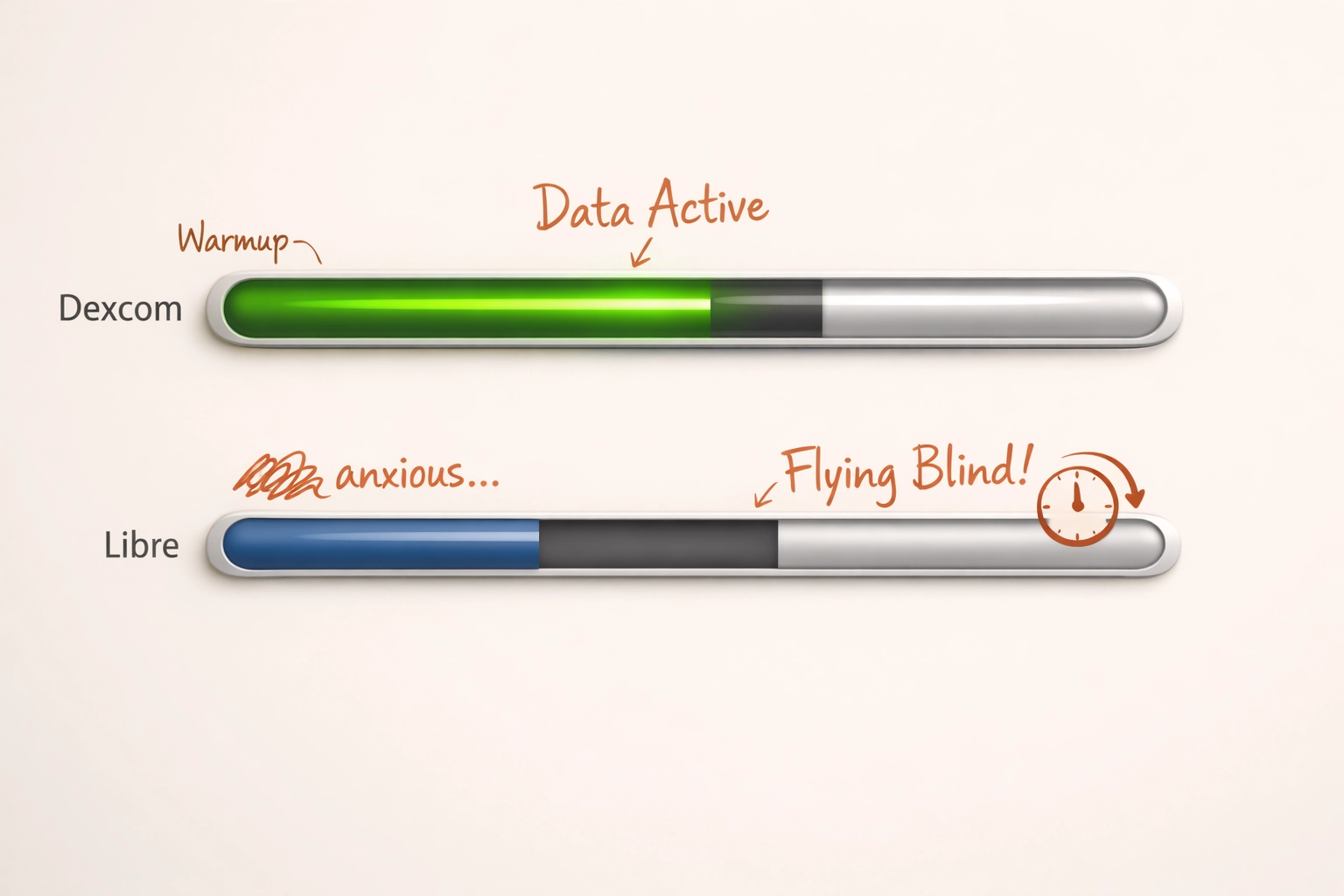
The Dexcom G7 takes about 30 minutes to start giving you data. Even better, the "grace period" means you can start the warmup for your new sensor while the old one is still finishing its final 12 hours. This eliminates the "CGM blackout": that hour of flying blind that used to cause so much anxiety during sensor changes.
The Libre 3 takes 60 minutes. It’s a small difference, but for a Veteran T1D, that’s 60 minutes of "what if?" especially if you're changing it right before a meal or exercise.
The Libre 3 is undeniably the winner in the "discreet" category. It’s about the size of two stacked pennies. It’s so thin that you genuinely forget it’s there. If you’re someone who wears tight clothing or worries about the sensor catching on a doorframe (we’ve all lost a sensor to a rogue doorframe), the Libre 3 is your best friend.
The Dexcom G7 is small: much smaller than the old G6: but it still has a slightly higher profile than the Libre. It looks more like a "medical device."
Wear Time Matters
This is where the Libre 3 pulls ahead for many. It lasts 14 days. The Dexcom G7 lasts 10 days (plus that 12-hour grace period).
Think about the math over a year.
That’s 10 fewer times a year you have to prep your skin, deal with adhesive, and manage the "new sensor" jitters. If you have sensitive skin or "sensor fatigue," those 10 extra days of peace matter.
This is the dealbreaker for most people. If you use an insulin pump, your CGM choice might already be made for you.
In 2026, the Dexcom G7 is the gold standard for integration. It talks to almost everything:
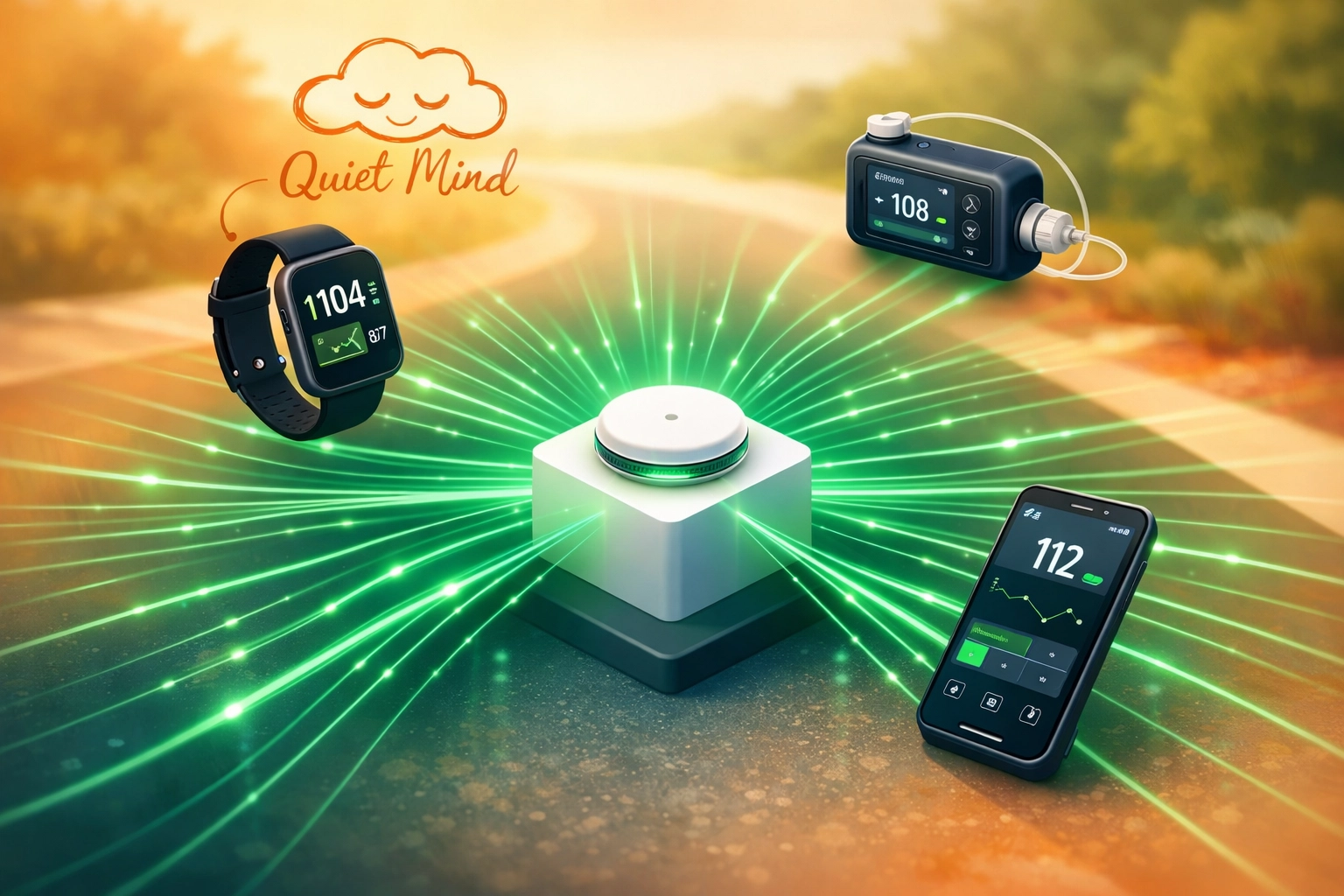
If you want your pump to automatically increase your basal when you’re trending high at 2:00 AM, you’re likely on Team Dexcom. The ability for the G7 to send data directly to an Apple Watch without needing the phone nearby is a game-changer for runners and anyone who wants to leave their "medical bag" behind for a few hours.
The Libre 3 Plus (the version designed for pump integration) has caught up significantly. It now works with the Omnipod 5 and Tandem systems in many regions. However, the integration ecosystem is still slightly more robust on the Dexcom side.
The biggest complaint about CGMs isn't the needle: it’s the noise.
Dexcom is famous (or infamous) for its alarms. The "Urgent Low Soon" alert is a lifesaver, but it can also be a nuisance. However, the G7 offers massive customization. You can silence all alerts for a set period or change the "Vibrate Only" settings.
The Libre 3 has a more streamlined approach. It has the essential alarms, but it feels less like a cockpit and more like a dashboard.
Connectivity Limits
The Dexcom G7 can connect to three devices simultaneously via Bluetooth (e.g., your Phone, your Watch, and your Pump).
The Libre 3 is generally limited to one primary connection at a time. If you need your data appearing in multiple places at once: or if you’re a parent using "Follow" apps to track a child: the Dexcom ecosystem is built for that level of data sharing.
| Feature | Dexcom G7 | Libre 3 |
|---|---|---|
| Wear Time | 10 Days (+ 12h grace) | 14 Days |
| Warmup Time | 30 Minutes | 60 Minutes |
| Accuracy (MARD) | ~8.2% | ~7.9% |
| Size | Small (Circular) | Tiny (Penny-sized) |
| Pump Integration | Tandem, Omnipod, iLet | Omnipod 5, Tandem |
| Direct-to-Watch | Yes (Apple/Android) | Limited |
| Calibrations | Optional (Factory Calibrated) | No (Factory Calibrated) |
| Water Resistance | 8 ft for 24 hours | 3.2 ft for 30 mins |
It’s worth noting that in 2026, we are seeing more "Lite" versions of these sensors.
Dexcom Stelo is now available over-the-counter (OTC) for Type 2s or non-insulin-using T1Ds. It doesn’t have the same high/low alarms because it’s designed for pattern recognition, not immediate crisis management.
Similarly, the Libre Rio and Dexcom ONE+ offer simpler experiences for those who don't need the full "closed-loop" tech stack but want the benefit of seeing their trends.
At Subseven, we believe the best tool is the one that removes the "guessing and stressing."
If you are a "Data Engineer" who wants every possible alert, direct-to-watch connectivity, and tight integration with an automated pump, the Dexcom G7 is your cockpit. It’s built for the person who wants to optimize every single percentage point of their Time in Range (TIR).
If you are a "Minimalist Veteran" who just wants to live their life with the least amount of medical intervention possible, the Libre 3 is your ghost-companion. It’s discreet, lasts longer, and provides the same high-quality data without demanding as much attention.
Which one should you choose?
The best CGM is the one you actually wear consistently. Both the G7 and the Libre 3 are miracles of modern engineering. They both take the "guessing" out of the equation.
Once you have your data flowing: regardless of which sensor it comes from: the next step is turning that data into insight. That’s where tools like Subseven come in. We don't care which sensor you use; we care that you have the tools to understand why your sugar is doing what it’s doing, so you can stop thinking about it and start living.
Pick the sensor that fits your arm, fits your pump, and most importantly, fits your brain. The tech is here to serve you( not the other way around.)


