


The doctor says the words, and the room goes cold. You came in because your child was thirsty and tired. You leave with a prescription for a life-altering medical regimen and a bag of supplies that look like they belong in an ICU, not a kitchen.
The world tilts. Every parenting rule you had: from "don't obsess over food" to "let them sleep through the night": is immediately revoked. You’re no longer just a parent; you’re a pancreas. You’re a data analyst, a nurse, and a middle-of-the-night emergency responder.
Nobody prepares you for the emotional weight of raising a T1D child. They teach you how to carb count. They teach you how to rotate injection sites. But they don't teach you how to handle the "invisible load" of the fear that never actually goes to sleep.
Before T1D, a "bad night" meant your kid had a nightmare or a wet bed. Now, a bad night is a flat line on a CGM that suddenly takes a dive at 1:45 AM.
Research shows that nearly one in four parents of children with T1D experience clinically significant anxiety or depression. A huge driver of that? Sleep deprivation. You live in a state of hyper-vigilance. Even with high-tech alarms, your brain develops a "T1D ear." You hear the specific vibration of a Dexcom through three walls.
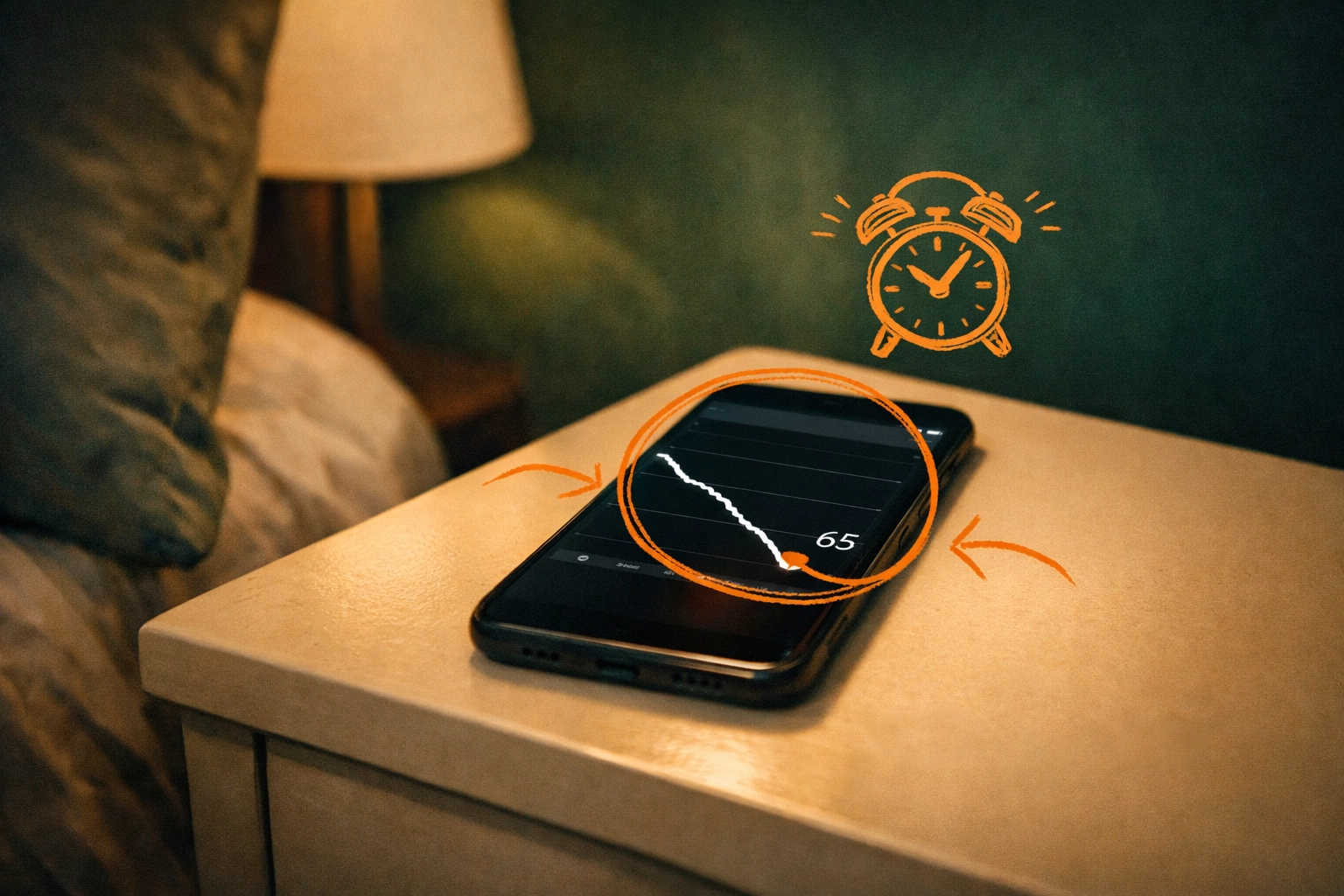
You wake up, check the app, and do the math. Are they dropping because of the soccer game four hours ago? Is the basal rate too high? Should I wake them up for juice and risk ruining their sleep, or wait ten minutes and risk a seizure?
This isn't just "tired." This is a physiological state of high-alert that lasts for years. It’s the feeling of being the only thing standing between your child and a medical emergency while the rest of the neighborhood sleeps.
Sending a child to school used to be about backpacks and lunchboxes. Now, it’s about 504 plans and the exhausting process of educating people who don't understand the difference between Type 1 and Type 2.
You have to trust a teacher: who has twenty other kids to worry about: to notice if your child is acting "off." You have to hope the school nurse is actually in the building when a sensor fails. You spend your lunch break staring at a CGM follow app, wondering why they spiked to 280 after a ham sandwich.
The logistical load is a full-time job.
It’s a constant battle to let your child just be a kid while maintaining the medical discipline required to keep them safe.
We don't talk about this enough, but T1D is a massive stressor on a marriage or partnership. The burden of care is rarely equal. Statistics show that mothers often perform upwards of 70-80% of the daily management tasks.
One parent becomes the "Expert," and the other often feels sidelined or terrified of making a mistake. This leads to a toxic cycle: one parent is burnt out from doing everything, and the other is anxious because they don't feel "trained" enough to help.
Then there’s the guilt. The irrational, heavy feeling that somehow your genetics or your choices caused this. Or the daily guilt when a bolus is off and your child spends the afternoon at 350.
Here is the Engineer's reality check: You cannot control biology. You can only manage it. A high blood sugar is not a parenting failure; it’s a data point. But as a parent (The Veteran), it’s hard to remember that when your child is crying because they’re tired of being poked.
The goal of parenting is to raise an independent adult. The goal of T1D management is to keep a child in range. These two goals are constantly at odds.
If you hover too much, you create "diabetes burnout" before they even hit high school. If you back off too much, their A1C climbs and you worry about their long-term health.

The transition of care is the hardest part. Letting a ten-year-old dose themselves for a snack feels like handing them the keys to a Ferrari. You know they need to learn, but the stakes feel impossibly high.
The path to freedom isn't through "trying harder" or more willpower. It’s through systems. It’s about moving from "guessing" to "tracking." This is why we built Subseven: to take that cognitive load off your shoulders and put it into a system that understands the patterns you're too tired to see.
The most underrated management tool isn't a faster insulin or a smaller pump: it’s community.
When you find other T1D parents, you stop having to explain why you’re crying over a juice box. You find people who understand the "3 AM rage-bolus" and the fear of the school field trip.
Whether it's through local meetups, JDRF events, or online communities like Reddit’s r/diabetes_t1, connection is what keeps you sane. It’s where you learn the "hacks" that endos don't always mention: like how to keep a sensor on a sweaty kid during summer camp or which snacks don't cause the dreaded 2-hour spike.
Most of the medical system is focused on the patient. They check your child’s A1C, their height, and their weight. They rarely ask, "How are you sleeping? How is your mental health?"
Parenting a T1D child is one of the most demanding caregiving roles on the planet. You are managing a chronic condition that requires 180+ decisions a day for a person who might not even be old enough to tie their own shoes.
You aren't failing because you’re tired. You’re tired because it’s hard.
At Subseven, we believe that our story starts with understanding that the person behind the data: the parent, the caregiver, the patient: needs a break. We’re building tools to help turn that "invisible load" into actionable insights, so you can spend less time staring at a graph and more time just being a parent.
You’re doing a better job than you think. The fact that you’re worried enough to read this proves it. Take a breath. Check the CGM one last time. And if you need a system that does the heavy lifting for you, we’re here to help.


