


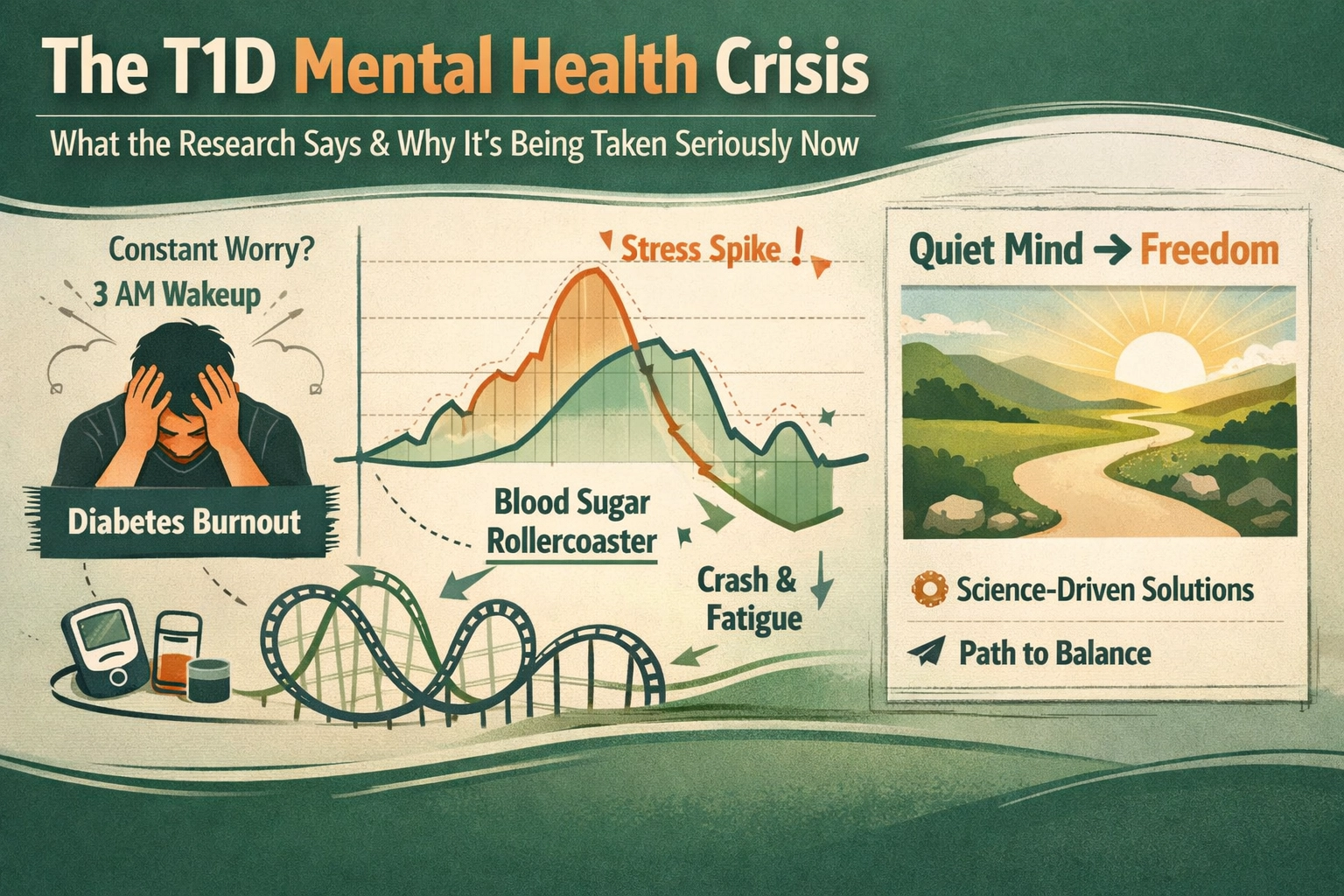
If you have Type 1 Diabetes, you are two to three times more likely to experience depression or anxiety than the general population. That isn’t a scare tactic; it’s a statistical reality. According to recent 2025-2026 data, 79% of us report some level of diabetes burnout. Nearly one in four adults with T1D is living with clinical depression, and one in three adolescents deals with significant diabetes distress.
We’ve spent decades focusing on the biology: the insulin-to-carb ratios, the A1C, the Time in Range. But the clinical world is finally waking up to something we’ve known in our bones for years: the hardest part of T1D isn’t the injections. It’s the relentless, 24/7 mental load that never takes a holiday.
The mental health burden of T1D is finally being treated as a clinical priority rather than a "side effect." Here is what the research says and why the landscape is finally changing for the better.
As a "Veteran" of this condition, I can tell you that the mental health crisis in the T1D community isn't a character flaw. It’s a logical response to an impossible workload. Research shows we make between 180 and 300 diabetes-related decisions every single day.
Every time you look at a plate of food, every time you feel a slight flutter in your chest, every time you prepare for a workout, your brain runs a complex simulation.
This is decision fatigue in its purest form. When you do this for 10, 20, or 30 years, the cognitive load doesn’t just make you tired: it changes your brain chemistry. The constant hyper-vigilance required to stay alive creates a state of chronic stress. This isn't just "stress about having a disease"; it's physiological stress caused by the literal fear of death (hypoglycemia) and the long-term fear of complications.

For years, you’d walk into an endocrinologist's office, and they’d look at your labs before they looked at your face. If your A1C was high, the conversation was about "compliance." If your A1C was "good," you were told to keep doing what you’re doing: even if you were sacrificing your sanity to get those numbers.
The system was designed to optimize the machine (the body), not the operator (the human). Doctors are trained in metabolic pathways, not the nuances of chronic illness grief or T1D-specific anxiety. This created a massive gap where patients felt judged for their numbers while their mental health spiraled in private.
But in 2026, the script is flipping.
The American Diabetes Association (ADA) updated its Standards of Care for 2026 with a massive emphasis on the psychosocial aspect of the disease. It’s no longer a "suggestion" to check in on a patient's mental health; it’s now a clinical standard.
The new guidelines advocate for:
This shift acknowledges that you cannot achieve long-term physical health if the person managing the disease is burnt out and hopeless.
Recent studies have provided some of the most compelling evidence yet regarding the link between technology and mental well-being. A landmark 2026 study from King's College Hospital followed adults using hybrid closed-loop (AID) systems.
The findings were clear: Technology didn't just lower A1Cs; it significantly lowered diabetes distress scores. By automating the "micro-decisions": the small basal adjustments that keep you in range while you sleep: the systems effectively offloaded a portion of the cognitive burden.
However, the research also highlighted a new phenomenon: Tech Fatigue. While automated systems help, they also come with more alarms, more "pings," and the stress of maintaining expensive hardware. This is why mental health support for T1D must be multi-faceted. We can't just throw an algorithm at the problem and call it a day.
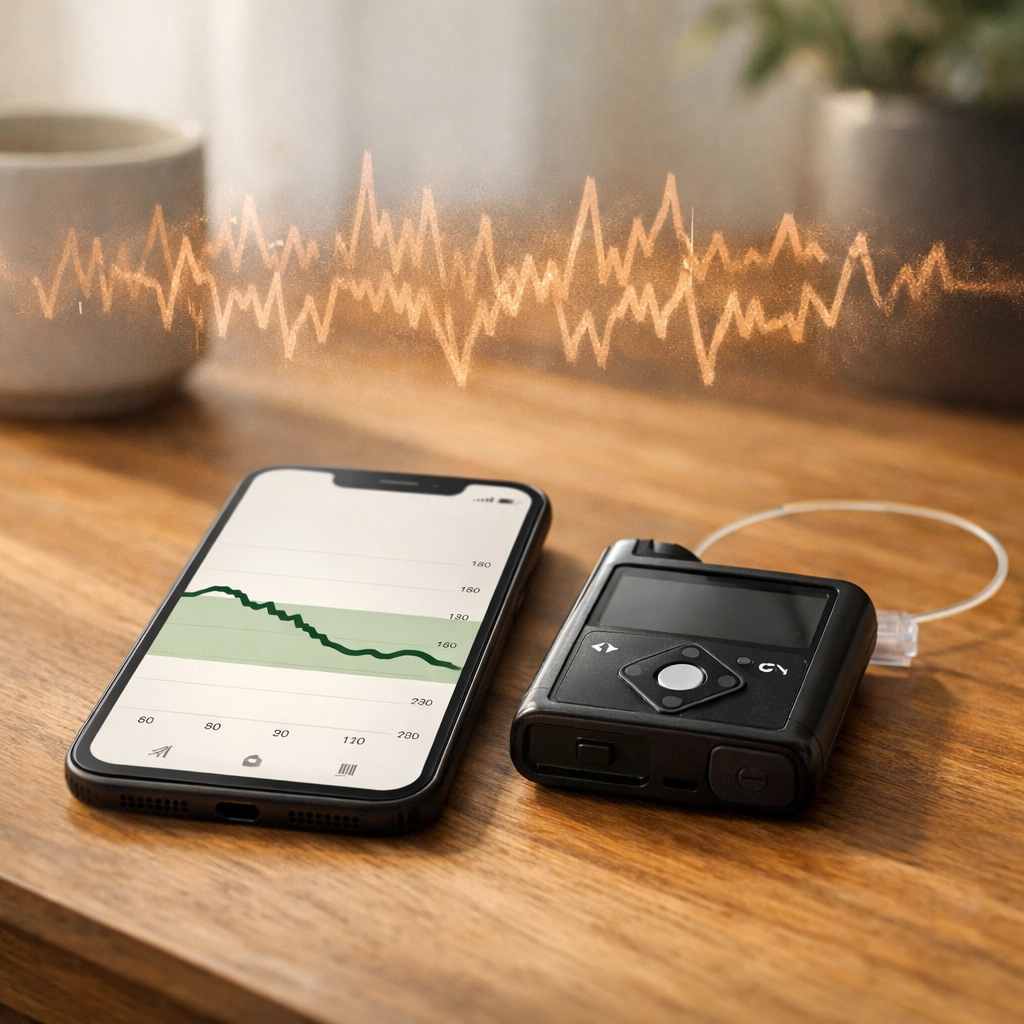
If you are struggling, it’s important to know that Type 1 Diabetes Anxiety and Diabetes Depression are specific conditions that require specific tools. General therapy is great, but a therapist who doesn't know what a "bolus" is can sometimes make you feel more isolated.
Here is what actually helps in 2026:
Look for providers who specialize in chronic illness. The "Mental Health Provider Directory" via the ADA or Breakthrough T1D (formerly JDRF) is an essential resource. These professionals understand that your "anxiety" might actually be a very rational fear of a 40 mg/dL blood sugar at 3 AM.
Modern CDCES professionals are being trained more heavily in the emotional side of the house. They can help you tweak your settings to reduce the number of "nuisance alarms" on your CGM, which is one of the fastest ways to reduce daily stress.
Isolation is the fuel for depression. Whether it's Reddit, specialized Facebook groups, or local meetups, finding people who "get it" without you having to explain the math is transformative. Subseven was built on this premise: that community and shared data reduce the "guessing" that leads to "stressing."
The "Visionary" approach to mental health is simple: Give your brain a break. Every decision you can hand off to a system: whether it’s a closed-loop pump or an app like Subseven that helps identify patterns: is a win for your mental health.
We need to stop viewing "mental health" and "diabetes management" as two different tasks. They are the same thing.
If you are in a state of burnout, your cortisol levels are high. High cortisol makes you insulin-resistant. High insulin resistance makes your blood sugar harder to manage. Hard-to-manage blood sugar leads to more frustration and burnout. It’s a physiological feedback loop.
Breaking that loop usually doesn't start with "trying harder" at your carb counting. It starts with acknowledging that this is hard, you are tired, and you deserve support that goes beyond a lab report.
At Subseven, we believe the goal of any diabetes tool shouldn’t just be a flat line on a CGM graph. It should be a quiet mind. We build technology to take the stressing and guessing out of the equation so you can reclaim the mental space T1D tries to steal from you every day.
You aren't a patient failing a treatment plan. You’re a human being managing a complex biological system 24/7. Give yourself the grace the statistics say you’ve earned.
If you’re feeling overwhelmed, start by talking to your team about your mental load, not just your numbers. It’s the most important conversation you’ll have this year.


