


A non-diabetic traveler packs a toothbrush, a passport, and a change of clothes. You pack a mobile pharmacy.
When you have Type 1 Diabetes, "getting away from it all" is a bit of a lie. You can leave your job and your house, but you can’t leave your pancreas behind. Traveling with T1D is entirely manageable, it just takes a level of preparation and cognitive load that people without the condition can’t begin to fathom.
It is the "invisible tax" on freedom. If you don't pay it upfront in planning, you’ll pay it later in stress, spikes, and missed experiences.
I’ve had T1D for 18 years. I’ve traveled to dozens of countries, survived 14-hour flights, and dealt with pump failures in places where I didn't speak the language. Here is the blueprint for taking the stressing and guessing out of your next trip.
The fundamental law of T1D travel is simple: Pack twice as much as you think you’ll need.
If you’re going away for 10 days, you pack for 20. Why? Because sensors fail. Infusion sets get ripped out on hotel door handles. Insulin vials shatter on tile floors. In the real world, "backup" isn't a luxury; it’s a survival requirement.
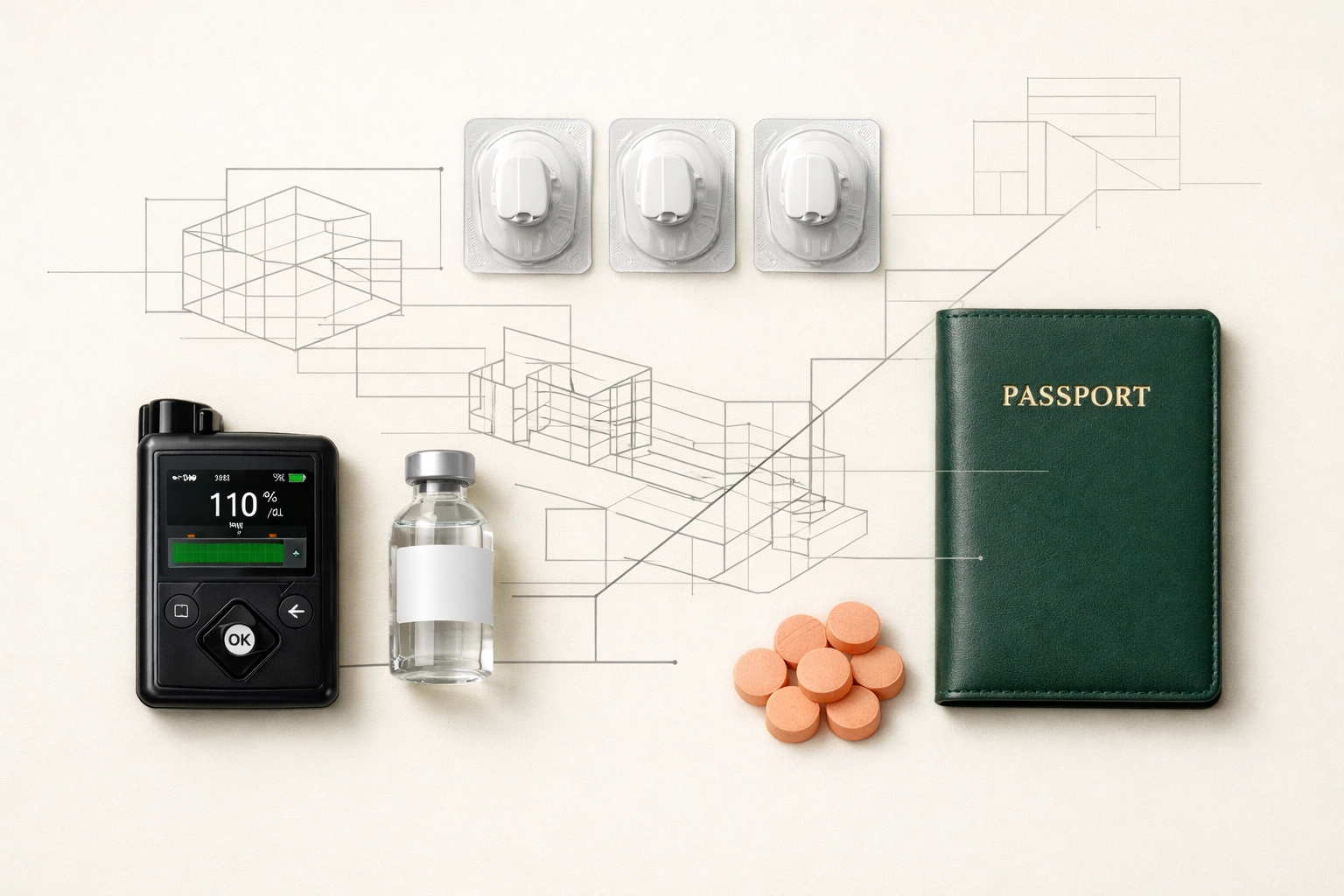
The TSA (or its international equivalent) is often the most stressful part of the journey. You’re standing there, half-dressed, with a beeping medical device attached to your body, while a line of frustrated people waits behind you.
Here is the Engineer’s Guide to the checkpoint:
Don’t let the pressure of the line make you rush. It’s your body and your expensive technology. Take your time.
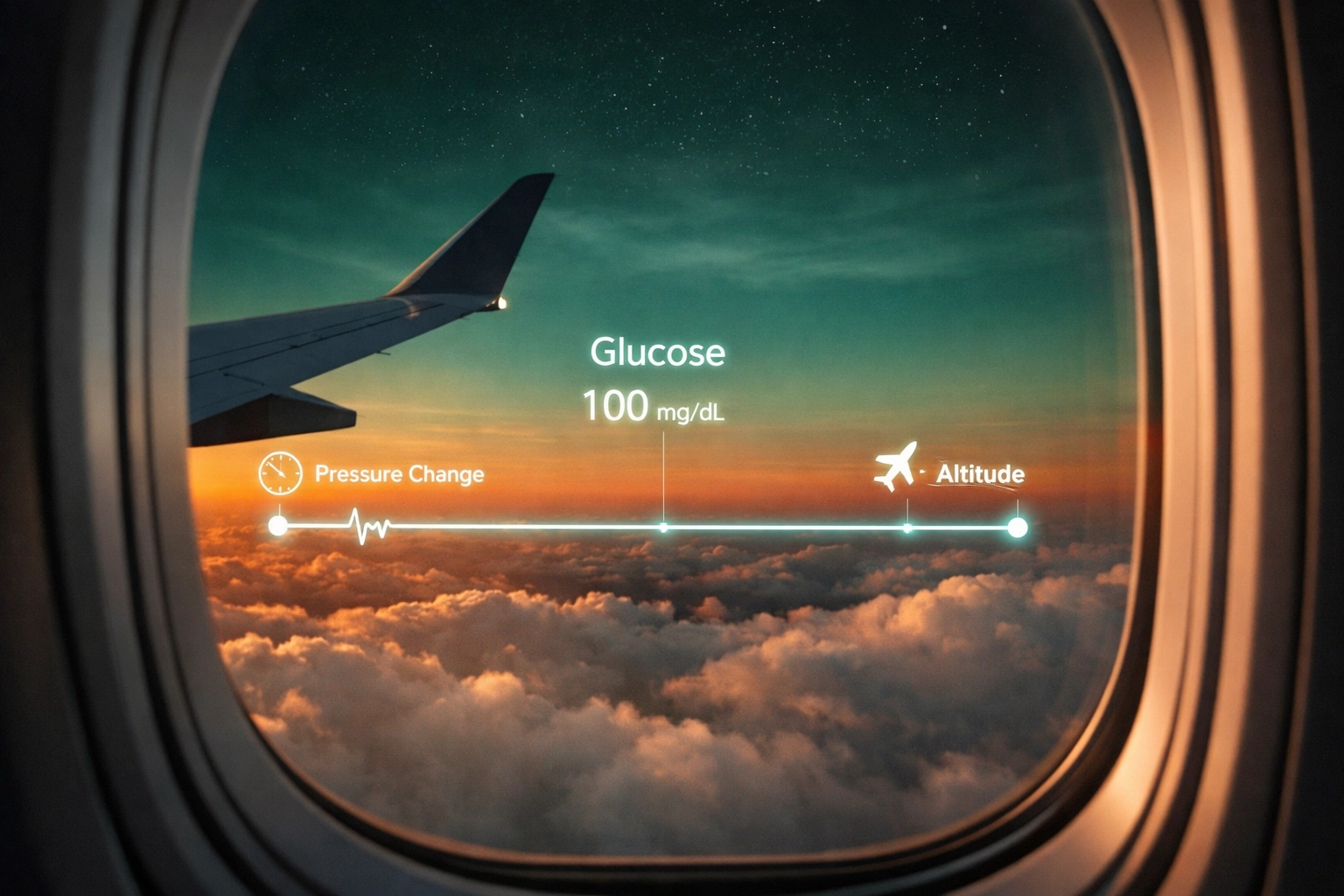
Flying does weird things to the human body. For T1D, it adds a layer of biological math that most people ignore.
Pressure Changes and Pumps:
When a plane climbs, the cabin pressure drops. According to fluid physics, this can cause small air bubbles to expand in your pump tubing, potentially delivering a small, unintended bolus of insulin. Conversely, when the plane descends, the pressure increase can slightly "pull back" or delay delivery.
Altitude and Blood Sugar:
High altitude can cause temporary insulin resistance in some people due to the slight stress on the body and lower oxygen levels. Others find that the "stress" of travel causes a cortisol spike that keeps them high for the duration of the flight.
The Strategy:
Don't over-bolus for "airplane food" (which is notoriously hard to carb count). Aim for "stable" rather than "perfect." If you stay between 100-180 mg/dL during a flight, you’ve won.
Crossing time zones is a math problem. If you’re traveling from New York to London, you’re losing five hours. If you’re on a pump, your "3:00 AM" basal rate (which might be your lowest) is suddenly hitting you at 10:00 PM London time.
The goal is to avoid having your "dawn phenomenon" basal increase happen while you’re actually at the dinner table.
Traveling internationally adds the challenge of language and different food standards.
The most frustrating part of T1D travel is the loss of spontaneity. You can’t just walk out of the hotel and wander for six hours without thinking. You have to check your CGM, pack glucose tabs, and make sure your pump battery isn't at 10%.
But here is the Visionary perspective: You can still do everything.
You just do it with a slightly bigger bag. Having T1D doesn't mean you can't hike the Inca Trail or backpack through South East Asia. It just means you are the person who is the most prepared.
When you use tools like Subseven to track how travel stress and "vacation food" affect your glucose, you start to see patterns. You realize that a 2-hour walking tour of Rome affects you exactly the same way as a 45-minute gym session at home.
The data takes the fear out of the unknown.
Traveling with T1D is front-loaded work. You do 90% of the heavy lifting before you even leave for the airport.
If you pack the extra sensors, download the offline data, and prepare for the pressure changes, the actual trip becomes what it's supposed to be: an adventure.
The first time you travel internationally with T1D, it feels like a military operation. The tenth time, it’s just a routine. Don't let the logistics shrink your world. Your "invisible tax" is paid. Now, go enjoy the trip.
If you want to see how we’re making the "invisible load" of T1D easier to carry, check out Our Story at Subseven.


